Search This Blog

Showing posts with label Eastern Panhandle. Show all posts

Monday, May 4, 2015

A Poor House

Poor House Farm Park Fishing Sign


The begging walk and the sign in front of the trail around the 5 acre pond.
Source: Debra Allen
Poor House Farm Park
Our Start
On Saturday we took a drive to the park that is near us. I took many pictures. It was quiet out there because they had the pond area blocked off because someone was going to be having a wedding that day. It is a gorgeous place to have a wedding that is for sure and you can bank on that. Well we got to walk through it and I took some very nice pictures. I, at first, did not think that they would turn out well. I was very pleasantly surprised when I got home and uploaded them onto my computer so that I could see them. They are gorgeous, if I say so myself. Now, I used a digital camera for all these pictures. I do have a much more powerful camera but I keep forgetting how to load the film in it. The last time that I did that, I took three rolls of photos and when I went to have them developed there was nothing on the film. I followed the directions and everything. I took off the protector even. I wasted all the precious time and all that money. So I don’t use that one anymore. I wish that I could but maybe some other day.


Used to be Mountainside Group Home


This house was used as the Group Home up until the year 2001 when the County took it over to make it part of the Park.
Source: Debra Allen


Poor House Farm Park has an interesting history with it.
One of the houses has been used as a Mental Health Facility Group Home.
That closed a few years ago, and the name of that was Mountainside Group Home.
It was part of the Eastridge Mental Health Facility’s program.



Poorhouses
Poorhouses were pre-welfare times. They were used to house those who could not pay their taxes and give the tax payers an alternative means to support the poor. These places were managed by an elected official of the town where the poorhouses were located. The manger or overseer title was “Poor Master.” It was only here that there would be people who would be in long term need of housing. For those who did not need such long term facilities they were given a relief, but had to ask for it. It was run similar to the Welfare System that we have today, only there was no such thing as homelessness unless they were caught begging in public places. They would be turned out to live individually…..homeless. I think that this was the real reason why people shun the homeless today. Hmmm, would we need to bring this type of help back? I wonder. We do have homeless shelter, but not everyone can accommodate the amount of those who have become homeless in this generation.


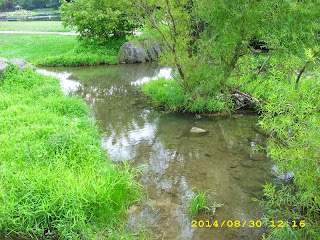
Poor House Farm Park 5 Acre Pond


A view of the Pond and the surrounding mountain and trees.
Source: Debra Allen
Origins of Landowners
An article that I found on the internet here, History of Poorhouses, tries to clear up the differences between debtors prison and poor houses and states, “One misconception should be cleared up here; they were nottechnically "debtors' prisons." Someone could owe a great deal of money, but if they could still provide themselves with the necessities for remaining independent they might avoid the poorhouse.”
Poor House Farm was on 400 acres of land west of Martinsburg, WV. It was owned by Davey Crockets Grandparents. David and Elizabeth Crocket were granted the 400 acres of land by Lord Fairfax in 1766. As the story goes that land changed hands many times over. Eventually through all the transfers it finally ended up being owned by John and Elizabeth Emmert. Most of the houses that were on the piece of land now known as Poor House Farm Park were made of logs. Eventually they were made of limestone. I do not know if they were re-built or just layered in the stone. They are re-building or re-furbishing the house that used to be the group home for the county.
The Football Field


Poor House Farm Park Football Field back-dropped near the mountain.
Source: Debra Allen
Today's Poor House Farm Park
The Emmert’s sold 140 acres to the Berkeley County in 1850 and in 1960 the Stewart house was built using bricks. When the state decided to begin the Welfare Program the poorhouses were outdated. Soon after that the houses were leased to private residents. The Mountainside House was a group home up until the year 2001 when the county took back all the land and started making it into the lovely park that it is today.
Poor House Farm Park


Houses and buildings
Source: Debra Allen
Just Sharing
There is so much to do there and yet
I just wanted to take a leisurely walk through the park with my husband and our dog.
The surroundings are so peaceful and serene and
I just love taking pictures and sharing them with others.
So you do enjoy the pictures that I am sharing.
Recreation In Poor House Farm Park
The park now consists of:
· One Large pavilion
· One medium pavilion
· 5 miles of hiking that meanders through a beautiful wooded area
· Emmert Field youth football complex
· Practice fields for soccer and base/soft ball
· Volleyball court in sand
· 18 hole disk golf course
· Henry Equestrian Arena
· A 5 acre pond filled with trout
Other Pictures That I took On My Walk


The Gazebo
Source: Debra Allen


The local residents.
Source: Debra Allen


More Information About Poor House
· HISTORY of Poorhouses
Poorhouses promised to be a much more efficient and cheaper way to provide relief to paupers.
· The Barn at Poor House Farm

· Find A Grave: Poor House Farm Cemetery #1, #2, #3


© Debra K. Allen a.k.a Lady Guinevere

I researched and wrote this article. Please do not copy and paste any part of this article, picture included for your own use. I will find you and report you for stealing. It is my right to change any information therein at any time and/or change the location of my article.

Monday, April 20, 2015

West Virginia’s Battle To Become A New Independent State

West Virginia State Seal


West Virginia State Seal
Source: http://commons.wikimedia.org/
Introductory
Western Virginia was part of the Confederate state of Virginia up until right about around the Civil War. The Civil War was more than about slavery and who owned who and what and who could do what to whom and so on and so forth. It was about livelihoods and commerce and economics, land and living on that land. It was about industry and wealth of the major players and it was about independence too. The independence that I will be talking about in this article is the way and when and how West Virginia became its own independent state in the Union.
There were many brothers who fought brothers and fathers who fought their sons and sons who fought their fathers in the bloody Civil War, but non such as when West Virginia became a state in the union. Some of this is confusing to me to write about and I will try to not confuse you as I try to explain this to you.


West Virginia: The Road to Statehood
How It All Began
It was in the state of Virginia that the subject and ownership of slave became a huge issue and it began to tear the people apart. This division lasted for several years and when things began to calm down that is when the state of West Virginia started forming.
With the battle of Fort Sumter and President Lincoln calling for volunteers did the talk of secession from the union come about. All delegates were in accordance before then. All hell broke loose and the federal government was the coercion that President Lincoln planned to use. Though it was not possible to do such against a state. Virginia came to vote on this and become a state in the new Confederate States of America for the South.. The nation as it stood before the civil was was more like two than one. There was the North called the Union and then there was the split that the South wanted and that was how the Confederate States came to be, only it did not last. Virginia wanted to secede from the northern states. The trouble started when those who lived in the western part of Virginia had 2/3rds of the vote to not secede from the Union.
It was then that the union and the confederates wanted to keep hold of the proposed state. You will be surprised to find out that it was not coal as it is today. It was the farmland and the salt as the products of West Virginia had at the time. The biggest push or resource was the Baltimore and Ohio Railroad. Virginia did not want to give this up as it was valuable in bring resources into the most powerful southern state of Virginia also known as the Old Dominion. Retaining this part of the state was a strategical part of the Confederacy because they thought that it would preserve the high standards and morale’s that the South prided themselves on before the Civil War began.


Harpers Ferry, West Virginia


Harpers Ferry, WV
Source: http://en.wikipedia.org/


John Brown

John Brown
Source: http://commons.wikimedia.org/wiki/
When John Brown, a passionate abolitionist, seized the federal arsenal at Harpers Ferry it threw the South into a panic. John Brown planned on using the guns and ammo to give to the slaves of Northern Virginia. The Underground Railroad was being use at that time and maybe a little bit before that. There were many places slaves were helped along the way to their freedom. Many did not make it but many also did. This is that backbone to our nation’s real beginning and the spark to our very own freedom.


Watch the History Channels video on Slavery and Black History in America:
http://www.history.com/topics/black-history/slavery


The first colony to acquire slaves


Start Of Slavery In America
Slavery started in Jamestown, Virginia in 1619. They were brought from Africa. They were brought to increase the production of such crops as Tobacco and cotton that was mainly grown in the South. They did not just pick up the Africans as in regular people. They picked and chose those who were in high status and the strongest which had an effect on Africa jeopardizing the strength of the African Nation. The Dutch sent over a ship and brought the first 20 slaves to America just after 1619. It is estimated that by the 1800’s there were more than 6 million slaves in the South alone. Most were farmers, household workers and the like. There has been movies that depicted how it was in the north and in the south. Two most noteworthy ones are: Gone With The Wind and North and South. Though they be more romantic they do have lots of historical facts to them.


West Virginia Culture


The push to abolish slavery really came about because the north were having pains of remembering how the British treated them and how they suppressed them as well. This is the real crux of the situation. That is why many from Western Virginia did not want to be included in the slave trade of the Commonwealth of Virginia. It had come a very tumultuous time in the states and the president had to do something. The very livelihood of both north and south were tearing apart and tearing the nation apart as well. Frances and Julia Pierpont, who resided in the Western Counties of Virginia, thought up a plan to keep those who lived in the Western part of Virginia to stay loyal to the Union of the North. That stirred up lots of emotions and loyalties and fights and it changed the whole nation at the time. Western Virginia did not depend on slavery for their economic growth and presence. It was a different way of life altogether.


West Virginia and the Civil War


Many people who lived in the Eastern Panhandle were split in the decision to be North or to be part of the South. The deciding factor was where the Baltimore and Ohio Railway lay. That was what decided where the boundaries of the new state of West Virginia would be. This is when the president sent in the troops for the Civil War. Virginia was one of the states that did not want to lose its way of life and they wanted to stay as they were which the first colony in the Americas was. They had the power and prestige and the political intuitiveness. In 1851 was when the first Wheeling Convention was held. It was there that the Western Virginians, representing 24 counties in the Western part of Virginia decided they wanted to become their own state..


West Virginia Counties


Map Of The current West Virginia County
Source: http://geology.com/


The Split of Counties
Virginia was part of all the counties except that of what is now known as the Northern Panhandle which included the city of Wheeling. They were not part of Virginia but of Ohio.

The B&O Railroad traversed the top of the state starting at Baltimore, Maryland crossing the western panhandle of Maryland and going across to the Ohio River which was about 300 miles of tracks. They went through mountains, over mountains and over rivers to get there. It took many men to build those tracks. Some $43,000 was being paid to the railroad company to send mail back and forth over the lines.
You can learn lots more here: http://www.borail.org/
When the western part of Virginia split off from the commonwealth, the Eastern Panhandle was formed. The new counties were now known as Morgan, Berkeley and Jefferson counties in the new state of West Virginia. The Northern Panhandle, that was in the state of Ohio, also split off and became the counties of Hancock, Brooke, Ohio and Marshal Counties in West Virginia. West Virginia became a brand new state on June 20, 1863. The first Governor of the new state was Arthur I. Boreman.


Without the Civil War and the changes in the thinking and livelihood of the people during the war, we would not have a Wild and Wonderful West Virginia. I am glad that we do. It is a wonderful state with many things to do and see.


© Debra K. Allen a.k.a Lady Guinevere

I researched and wrote this article. Please do not copy and paste any part of this article, picture included for your own use. I will find you and report you for stealing. It is my right to change any information therein at any time and/or change the location of my article.